← Back
TinkerCad icon

TinkerCad

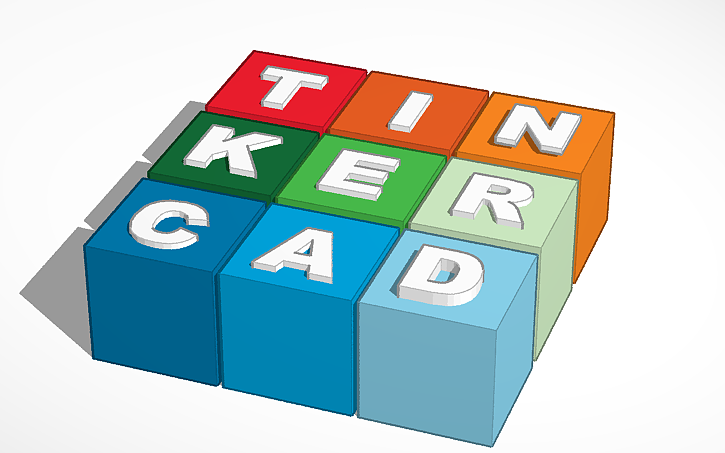
TinkerCad helps students design and model ideas in three dimensions. It supports experimentation, iteration, and turning abstract ideas into tangible prototypes.

What if your students prepared designs for 3D printing?

See how this could fit
Grades: 6–8, 9–12
Outcomes: Prototyping, spatial visualization, iterative design
Assessment: Students revise models based on feedback and functional constraints.
Curriculum: STEM, Engineering, Design

What if your students created models to explain an idea?

See how this could fit
Grades: 6–8, 9–12
Outcomes: Prototyping, spatial visualization, iterative design
Assessment: Students revise models based on feedback and functional constraints.
Curriculum: STEM, Engineering, Design

What if your students designed with specific constraints?

See how this could fit
Grades: 6–8, 9–12
Outcomes: Prototyping, spatial visualization, iterative design
Assessment: Students revise models based on feedback and functional constraints.
Curriculum: STEM, Engineering, Design

What if your students tested form versus function?

See how this could fit
Grades: 6–8, 9–12
Outcomes: Prototyping, spatial visualization, iterative design
Assessment: Students revise models based on feedback and functional constraints.
Curriculum: STEM, Engineering, Design

What if your students iterated through multiple versions?

See how this could fit
Grades: 6–8, 9–12
Outcomes: Prototyping, spatial visualization, iterative design
Assessment: Students revise models based on feedback and functional constraints.
Curriculum: STEM, Engineering, Design

What if your students built something for someone else?

See how this could fit
Grades: 6–8, 9–12
Outcomes: Prototyping, spatial visualization, iterative design
Assessment: Students revise models based on feedback and functional constraints.
Curriculum: STEM, Engineering, Design

What if your students explored scale and proportion through modeling?

See how this could fit
Grades: 6–8, 9–12
Outcomes: Prototyping, spatial visualization, iterative design
Assessment: Students revise models based on feedback and functional constraints.
Curriculum: STEM, Engineering, Design

What if your students redesigned an everyday object?

See how this could fit
Grades: 6–8, 9–12
Outcomes: Prototyping, spatial visualization, iterative design
Assessment: Students revise models based on feedback and functional constraints.
Curriculum: STEM, Engineering, Design

What if your students prototyped a solution before building it?

See how this could fit
Grades: 6–8, 9–12
Outcomes: Prototyping, spatial visualization, iterative design
Assessment: Students revise models based on feedback and functional constraints.
Curriculum: STEM, Engineering, Design

What if your students designed something that could exist in the real world?

See how this could fit
Grades: 6–8, 9–12
Outcomes: Prototyping, spatial visualization, iterative design
Assessment: Students revise models based on feedback and functional constraints.
Curriculum: STEM, Engineering, Design